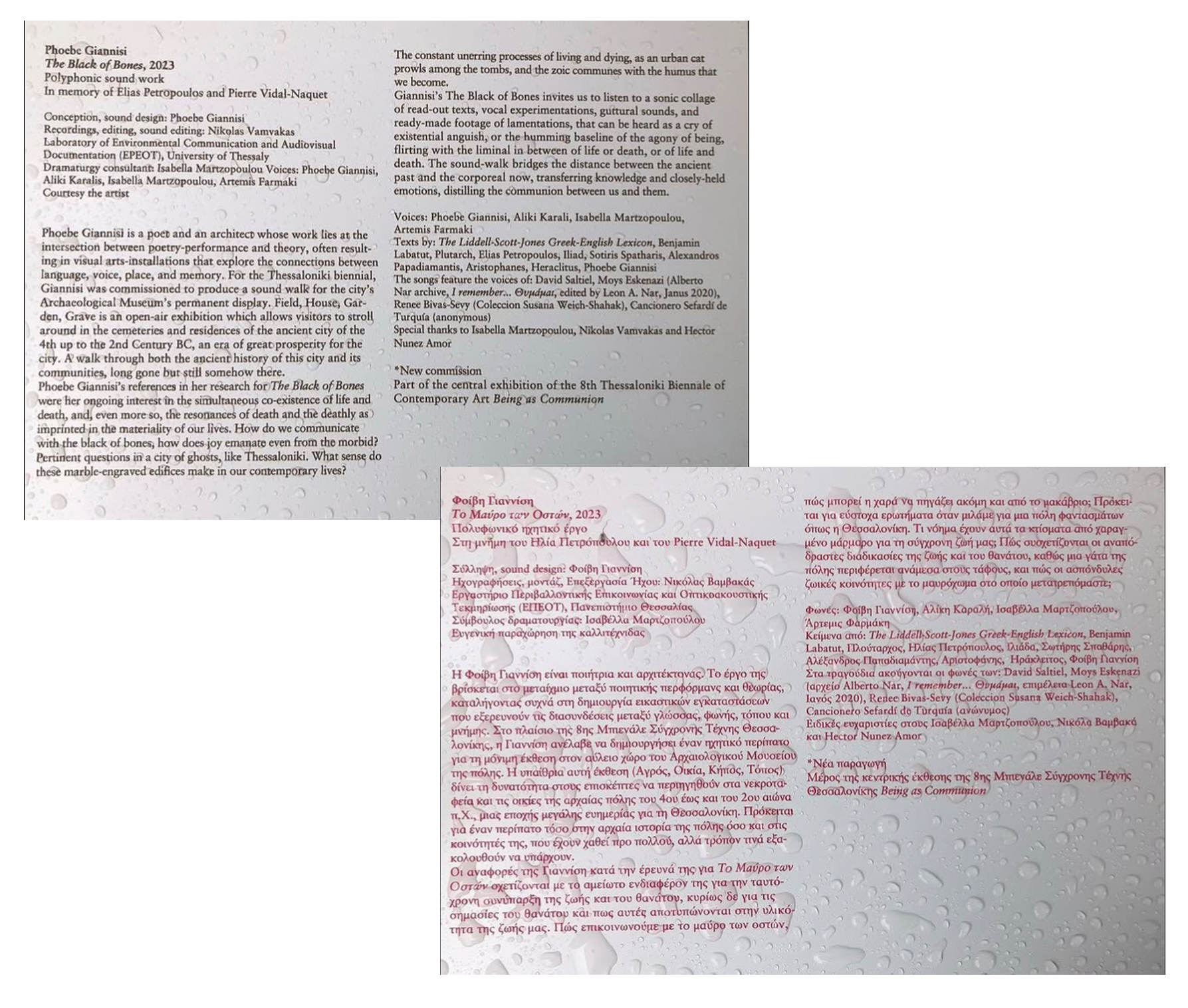
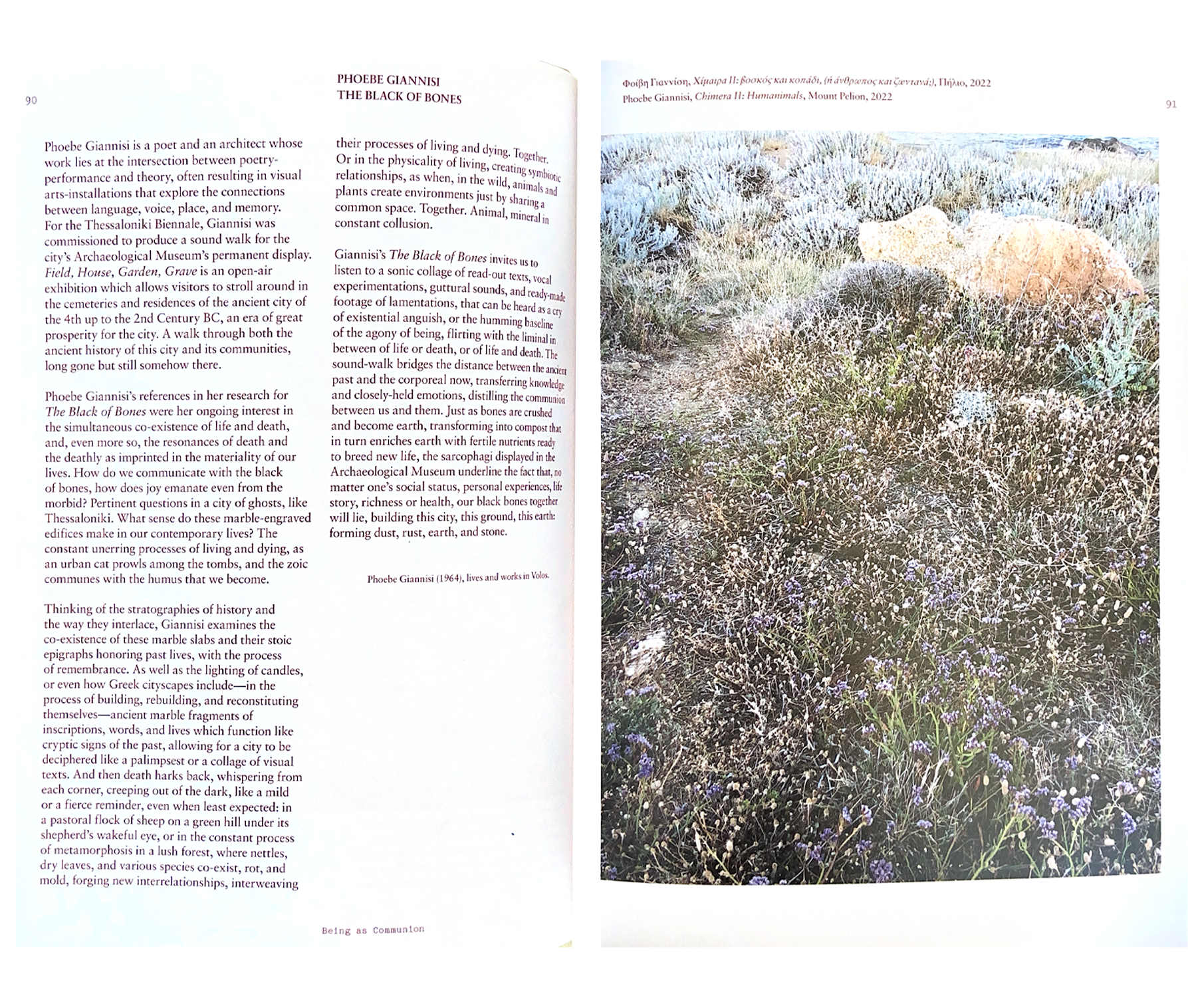
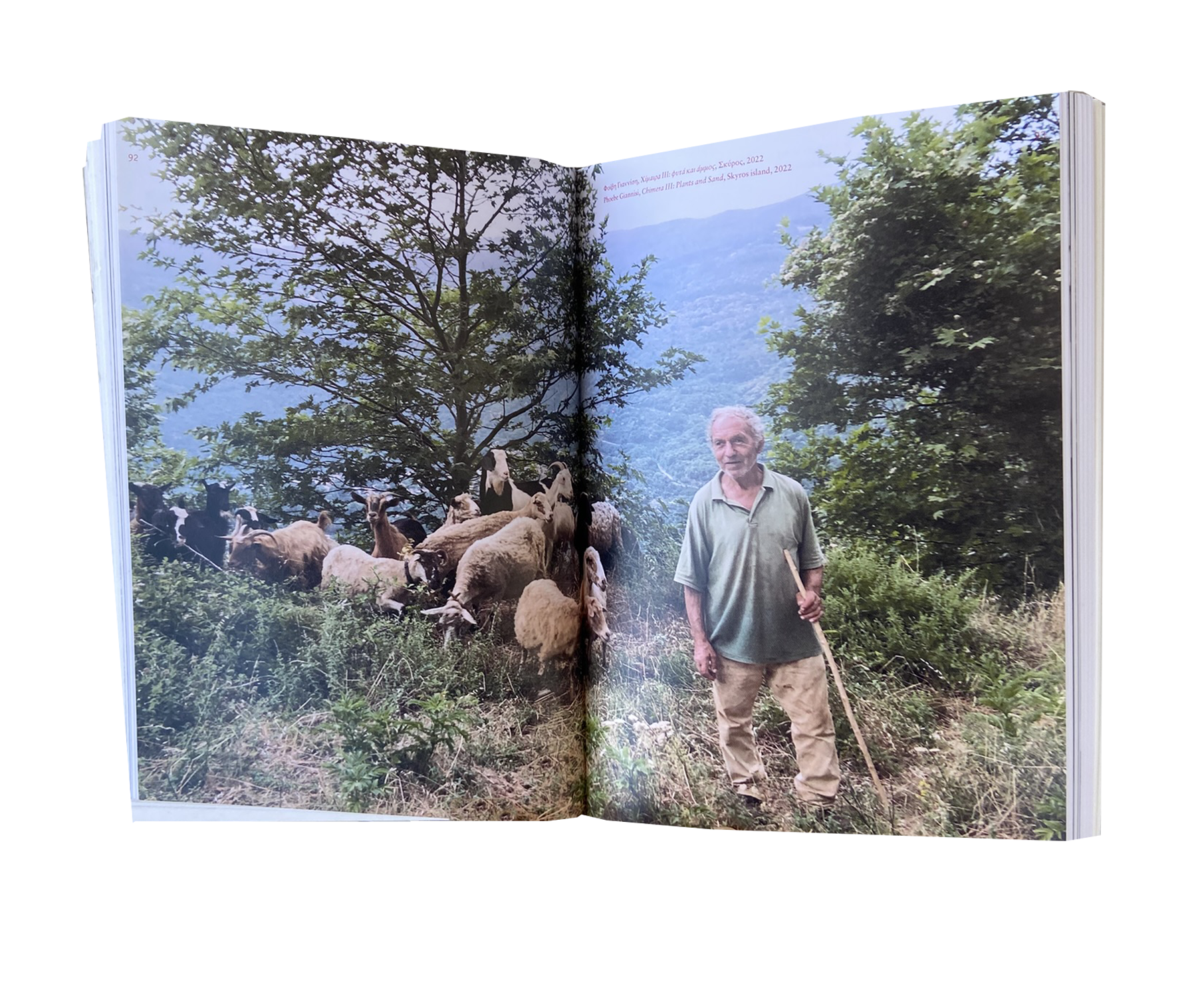
The Black of Bones, 2023.
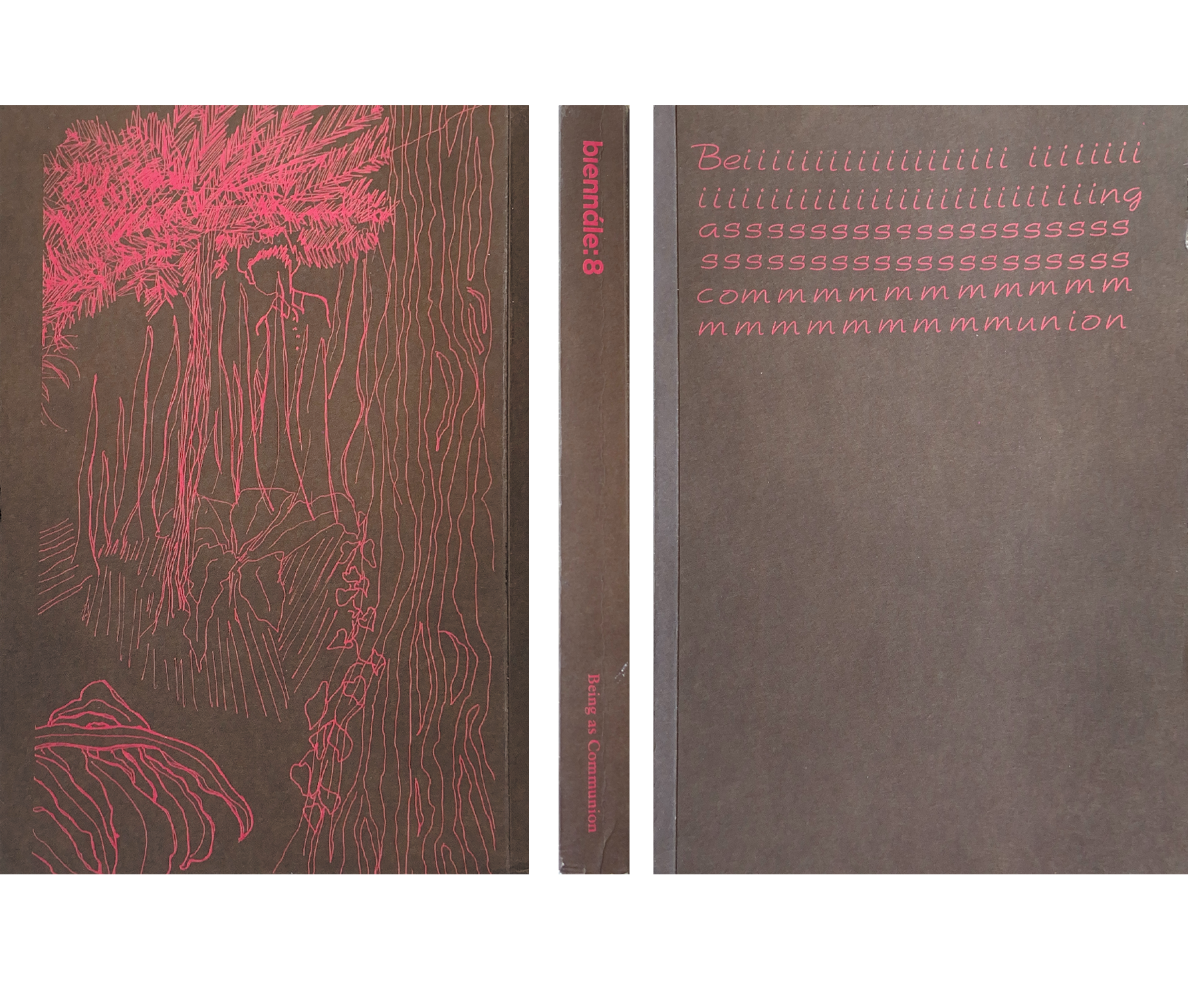
Thessaloniki Biennale, Being as Communion,
curated by Maria Thalia Carras.
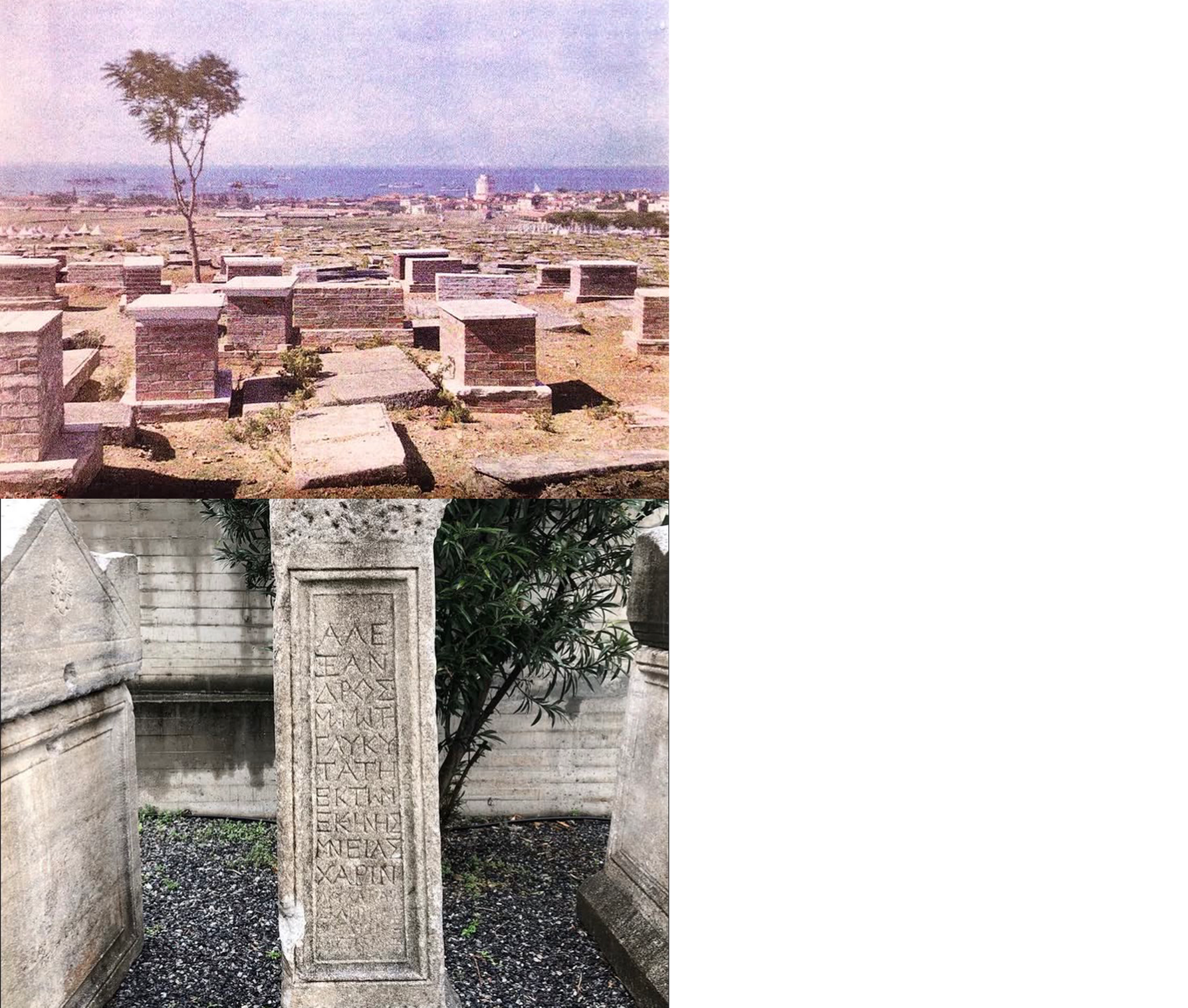
Thessaloniki Archaeological Museum.
Polyphonic sound work
In memory of Elias Petropoulos and Pierre Vidal-Naquet
Conception, Sound Design: Phoebe Giannisi
Recordings, editing, sound editing: Nikolas Vamvakas
Laboratory of Environmental Communication and Audiovisual Documentation (EPEOT), University of Thessaly
Dramaturgy Consultant: Isabella Martzopoulou
Voices: Phoebe Giannisi, Aliki Karali, Isabella Martzopoulou, Artemis Farmaki
Texts by: The Liddell-Scott-Jones Greek-English Lexicon, Benjamin Labatut, Plutarch, Elias Petropoulos, Iliad, Sotiris Spatharis, Alexandros Papadiamantis, Aristophanes, Heraclitus, Phoebe Giannisi
The songs feature the voices of: David Saltiel, Moys Eskenazi (Alberto Nar archive, I remember... Θυμάμαι, edited by Leon A. Nar, Janus 2020), Renee Bivas-Sevy (Coleccion Susana Weich-Shahak), Cancionero Sefardí de Turquía (anonymous)
Special thanks to Isabella Martzopoulou, Nikolas Vamvakas and Hector Nunez Amor
*New commission
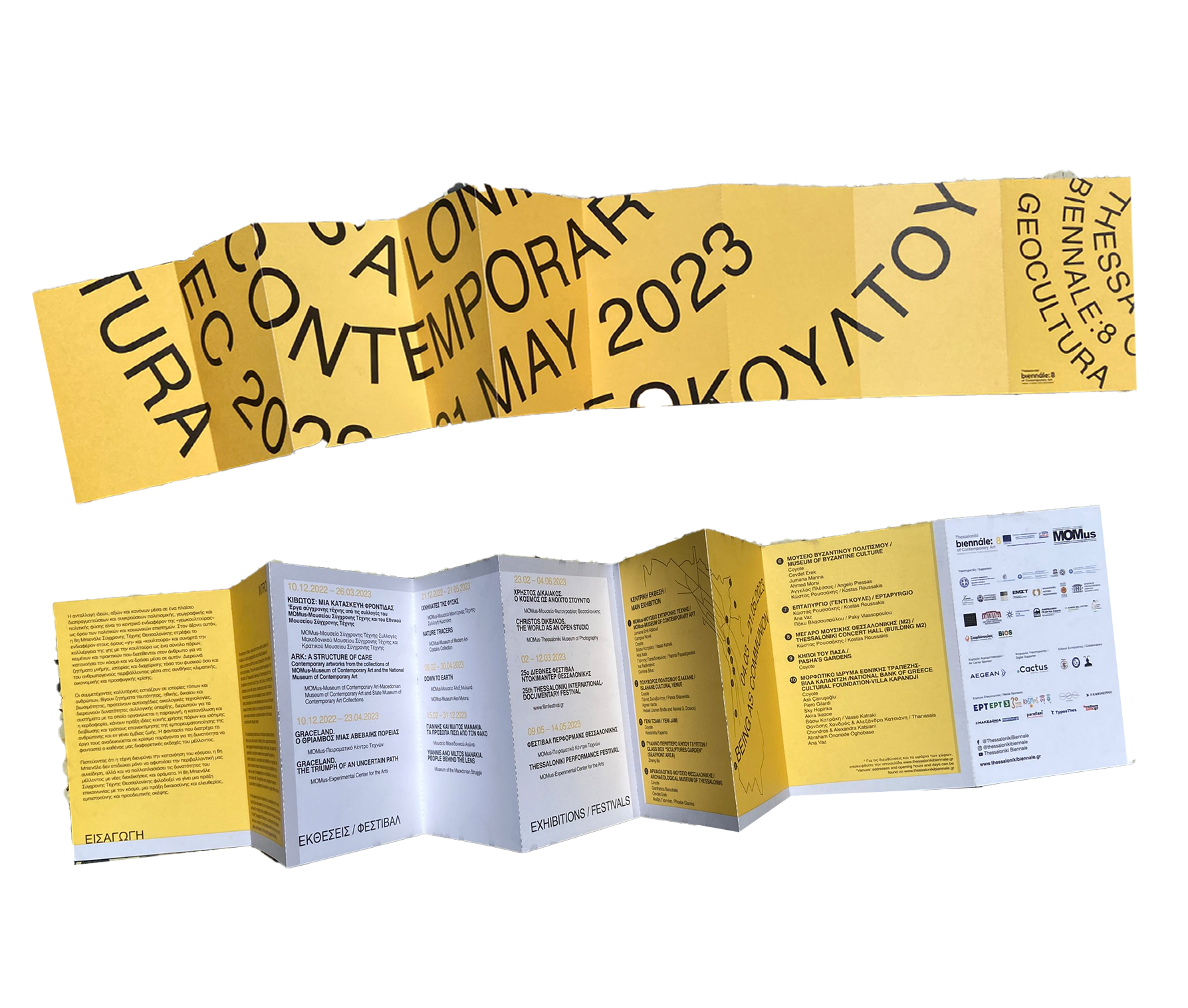
Part of the central exhibition of the 8th Thessaloniki Biennale of Contemporary Art Being as Communion
The central exhibition of the 8th Thessaloniki Biennale of Contemporary Art, entitled Being as Communion, is a reflection on the theme of coexistence – coexistence with the people beside us, but also with the beyond-human, with animals, forests, the gardens of our earth, with the shadows of the past, the dead, and the generations to come.
The exhibition attempts to cast a faint light that will pierce through the barrage of catastrophic predictions and the hazy uncertainty we are experiencing. It poses the question of whether we can imagine new forms of existence, new processes of life – having realised, however, that this is possible only under the condition of cooperation.
It reaches back to artistic practices of the past – practices that envision ways of cooperating with the earth, create radical pedagogical tools, pioneer ecological activism, and expand the horizon of our ways of coexistence. The contemporary works foretell multiple forms of society: with the fragile past of the city hosting the exhibition, with the forests, with the soil, with the people beside us, as well as with other species. Understanding the element of indeterminacy, the twenty-eight artists and artistic groups participating in the exhibition explore, question, and give their own answers. These answers contain ruptures, seek the restoration of injustice, and offer examples of understanding, affection and care, with the artists envisioning multiple forms of organisation, living and love.
The Being as Communion exhibition bears witness to the challenges involved in the effort to imagine alternative future paths for a city so deeply rooted in the past. Thessaloniki – a city with a 3,000-year history (Hellenistic, Roman-Byzantine, Ottoman, modern) – with all its moments of glory and its failures, allows us to acquire a broader conception of time. How can we speak about symbiosis, about our relationship with the future, in environments and cities where almost every trace of past "gatherings" has been lost?
It identifies affinities with the city's ghosts, seeking to coexist with them and to narrate their stories anew. It calls for a re-examination of the coexistence of the living and the dead, but also of humans, animals, forests and plants that constitute our environment. The exhibition asks us to think about how the living world around us makes us feel, and how we in turn affect it. The purpose? In the time we have, to appreciate and enjoy both the frictions and the joys of our shared life.
The Being as Communion exhibition unfolds across ten different venues, which function as small exhibition centres scattered throughout the city of Thessaloniki. Each space is connected to a specific period of the city's history.