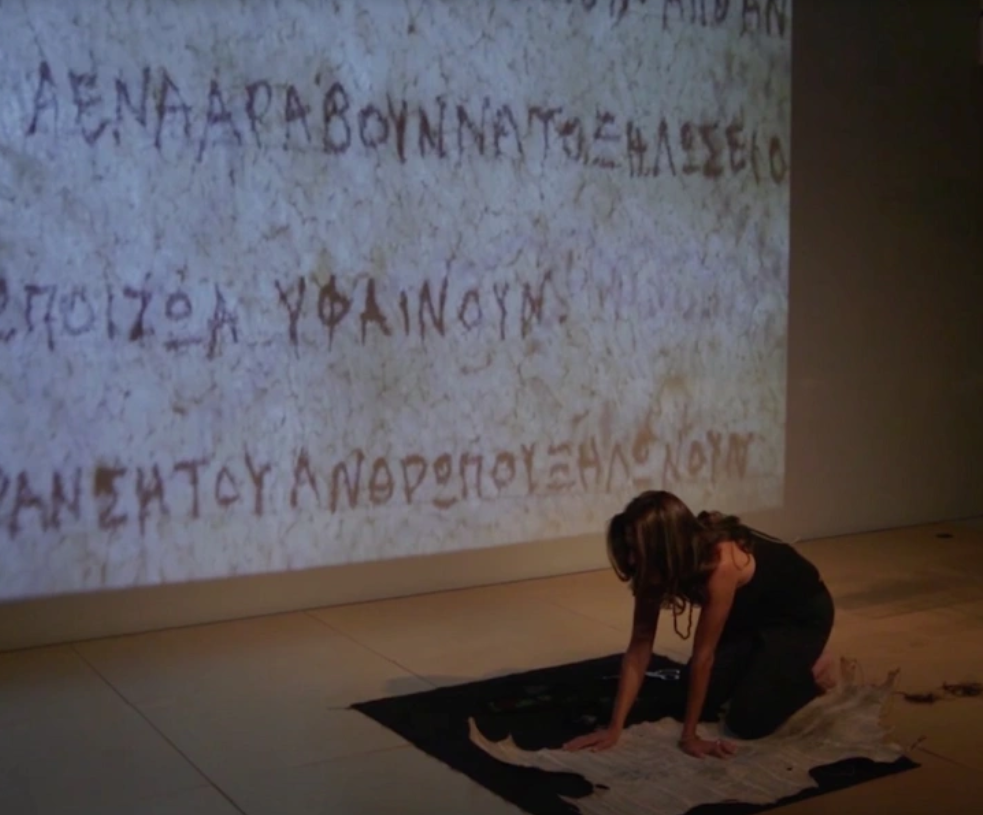
Phoebe Giannisi shares her thoughts on the publication of 'Goatsong'
The full interview:
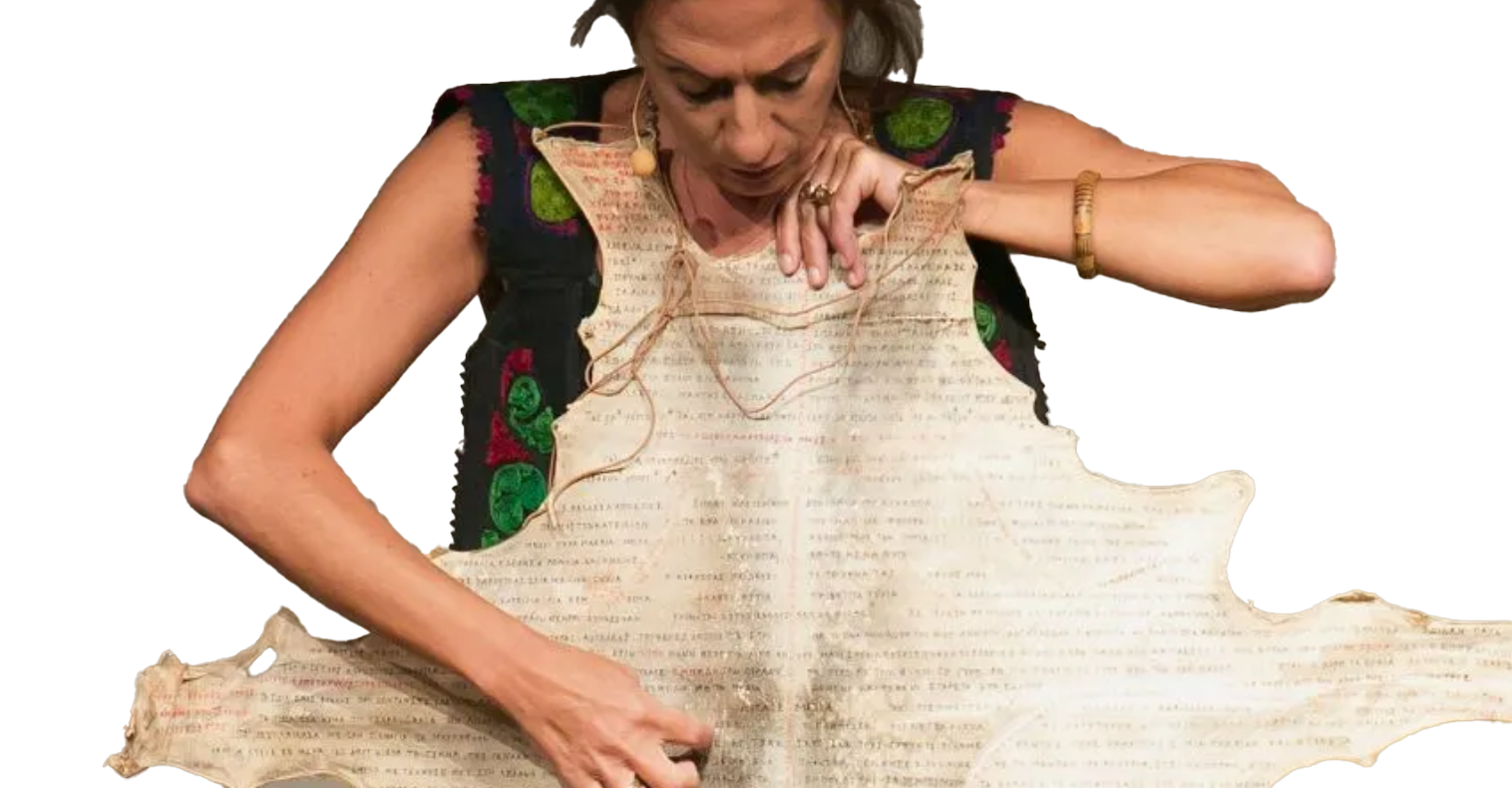
Phoebe Giannisi: Poetry through voice, body, and space. The poet talks about 'Goatsong', the collected edition of her poems, published by Fitzcarraldo Editions – one of the most important independent publishers in the UK right now
-What would you define as the starting points of your poetry?
Poetry begins in the cradle, with the hearing of songs – of songs and of the singing language itself. My mother would give us little rhymes in response to every word we said. On Good Friday, we would wake up at home to Ritsos's Epitaphios and the voice of Bithikotsis. I grew up with exquisitely set-to-music poetry; we had all of Mikis's records, and later those of Chatzidakis and Savvopoulos. I always listen to rebetika songs and the popular songs of the 1960s and 1970s, with their diamond-like lyrics and the clear sound of the bouzouki, and they make my chest swell. But I wrote poetry with my first readings of Elytis's Orientations, and also of the Greek translations of Lorca – which went hand in hand with the raw, gaping emotions of adolescence. And I continued by absorbing the Greek language in all its eras, dialects, tongues, hybridities and mixtures – listening to living speech wherever I happen to be, while also going through dictionaries with their words and etymologies; reading Sappho's poems and ancient lyric poetry, Homer, Papadiamantis's stories and all of Greek prose, Plato, the folk songs, Engonopoulos, Empeirikos, Matsis, Sachtouris, Cavafy, Ritsos, and ultimately the supreme of them all, Melpo Axioti, whom I adore. I read as much as I could of Western modernity, with a particular love for Marina Tsvetaeva and Rilke. I have read, and continue to read, poetry from Japan and Korea – with curiosity and enthusiasm for exploring other ways and other lives. However, only poetry in my own language truly moves me deeply and genuinely; the rest, I apprehend through meaning, but not through the actual, visceral feeling of the language itself.
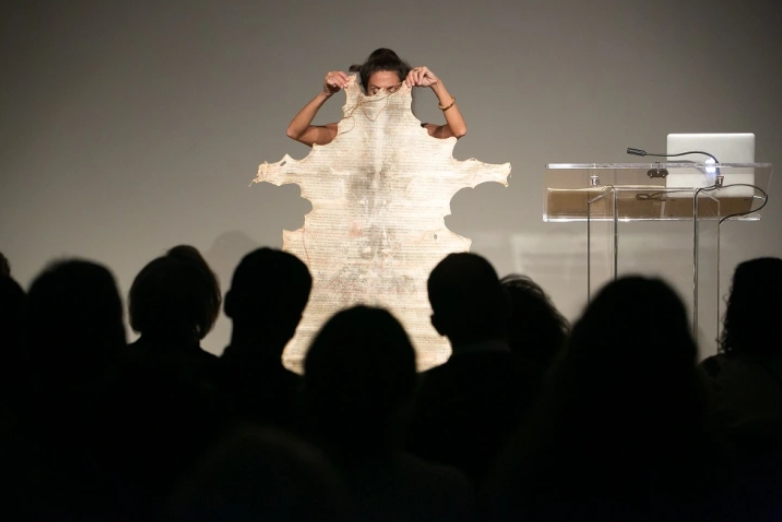
© Beowulf Sheehan
-What thoughts has the publication of 'Goatsong' by Fitzcarraldo Editions prompted in you, and what are you planning for the coming period?
It helped me somehow accept my own way, which keeps slipping away from me. I'm impatient because I've already completed another book and am waiting for it to come out – "Pelagos. Elegies and Epigrams". It's made up of fragments that follow one another, like waves. And it forms part of the material for a larger project whose remaining form I haven't yet found. I'm also happily waiting for "Aigaíou 7. Towards a Performative Architecture" to come out – a singular book somewhere between theory and poetry, which I wrote together with Zissis Kotionis about our house and our beloved neighbourhood, the seaside refugee settlement of Agria, on the outskirts of Volos. I already have one or two more poetic works in the pipeline, and I want to dive back into making handmade books, to find poetry in materiality, as I did with "Tettix", "Aigis", and "Thetis and Aedon". But right now, a few days ago, I visited the sheepfold (goat pen / mandri) after years, and I'm dying to go again – I don't yet know exactly why. Finally, I would wish for my work to become music – but that doesn't depend on me. Perhaps a live performance. And many other things. Unless life sweeps me away, or the sea and swimming, as usually happens, and I forget everything.
– To swim or to write?
– To swim.