“Nurturing Mechanisms: Interweavings in the Kambones”
5–19 September 2026
Historic Olive Grove of Kambones, Naxos
Participants: Phoivi Giannisi, Eirini Gonou, Sevastiana Konstaki, Mariandrie, Katerina Nakou
Concept and initiative of the exhibition: Maria Polykreti
Curated by: Sevastiana Konstaki
Organized by: Polykriti – Naxos
Audio recording
Voices: Phoebe Giannisi, Isabella Martzopoulou
Sound editing: Dimitris Antonakakis Giannissis
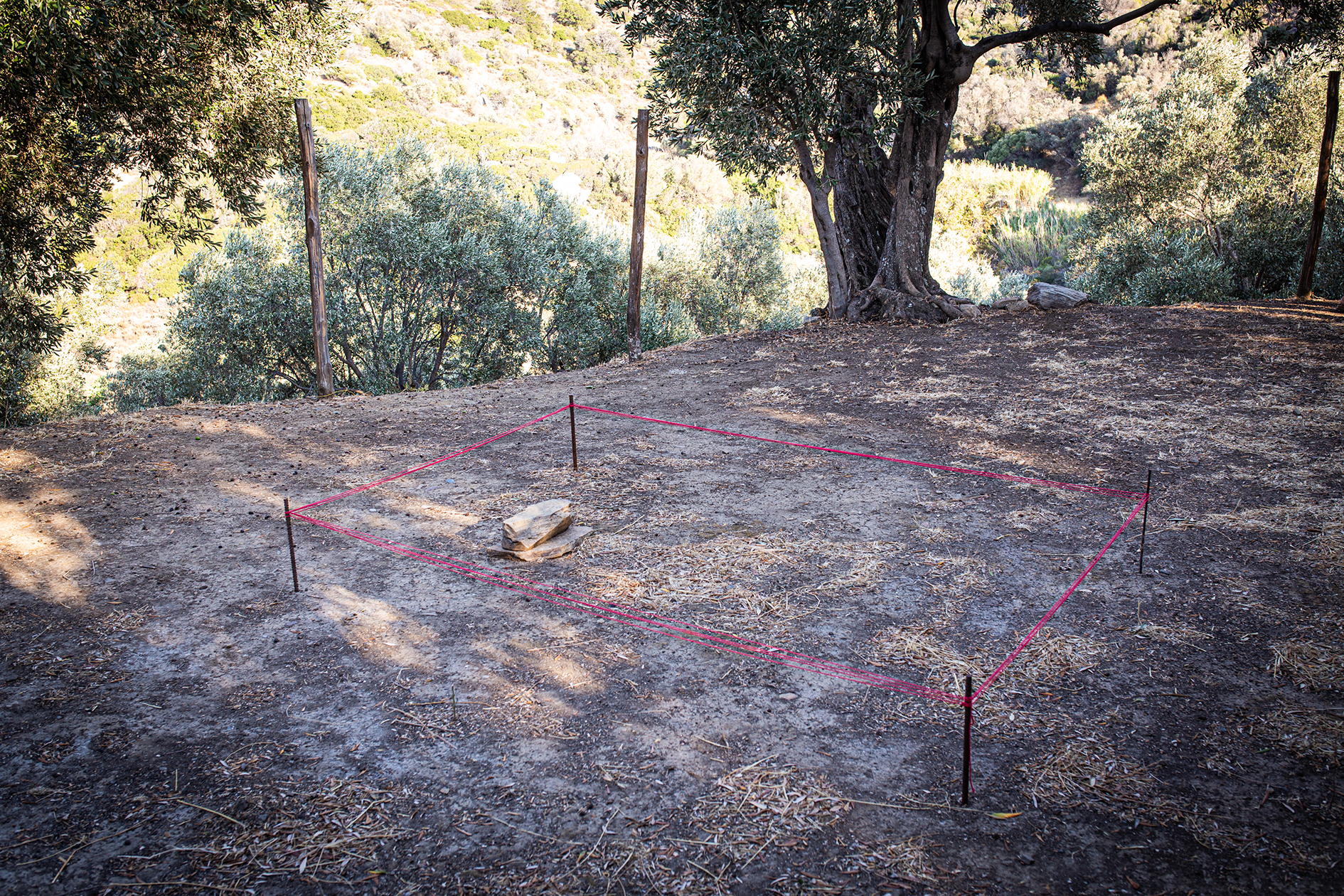
Photos: Χριστίνα Καλλιγιάννη/Christina Kalligianni.
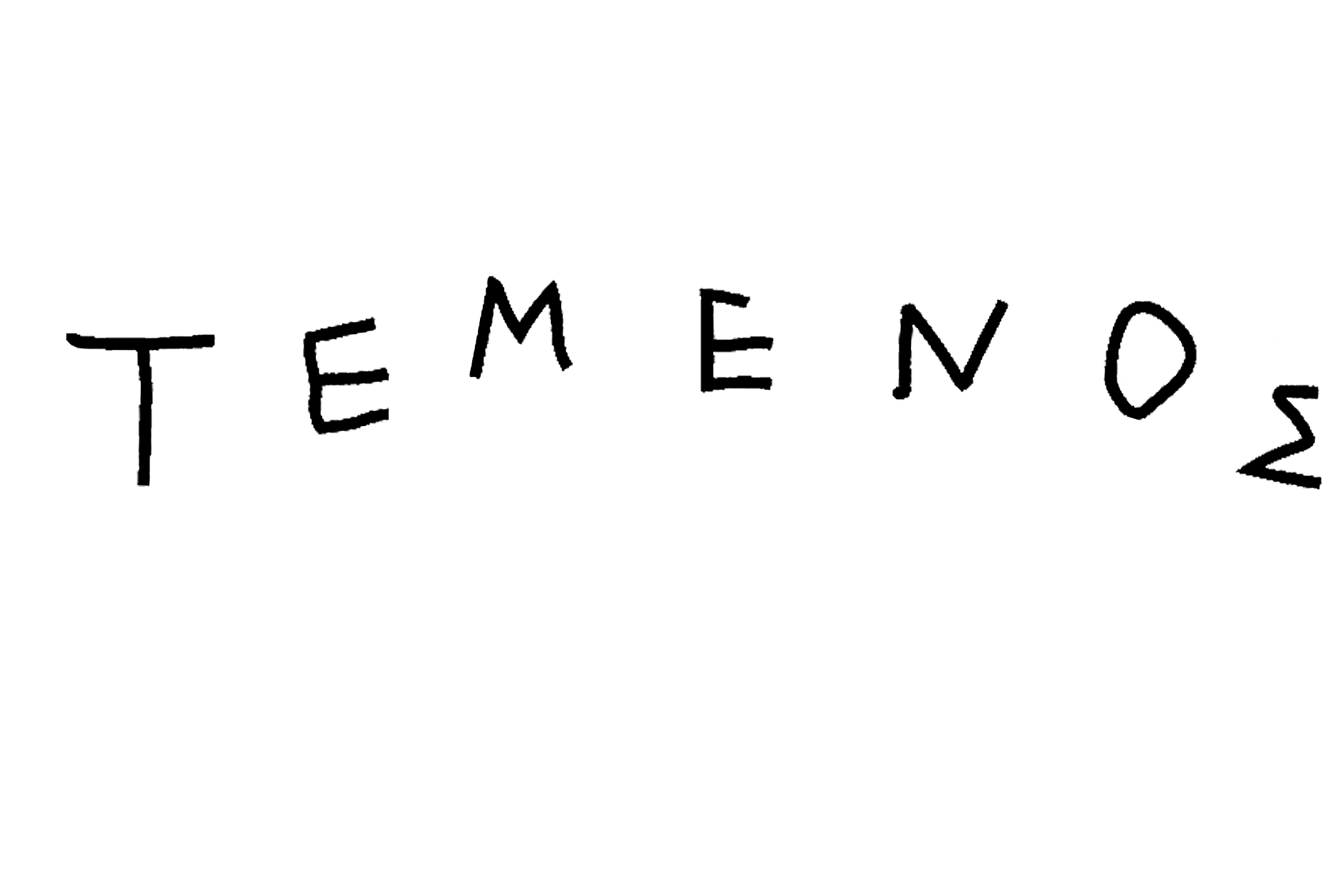
Installation,
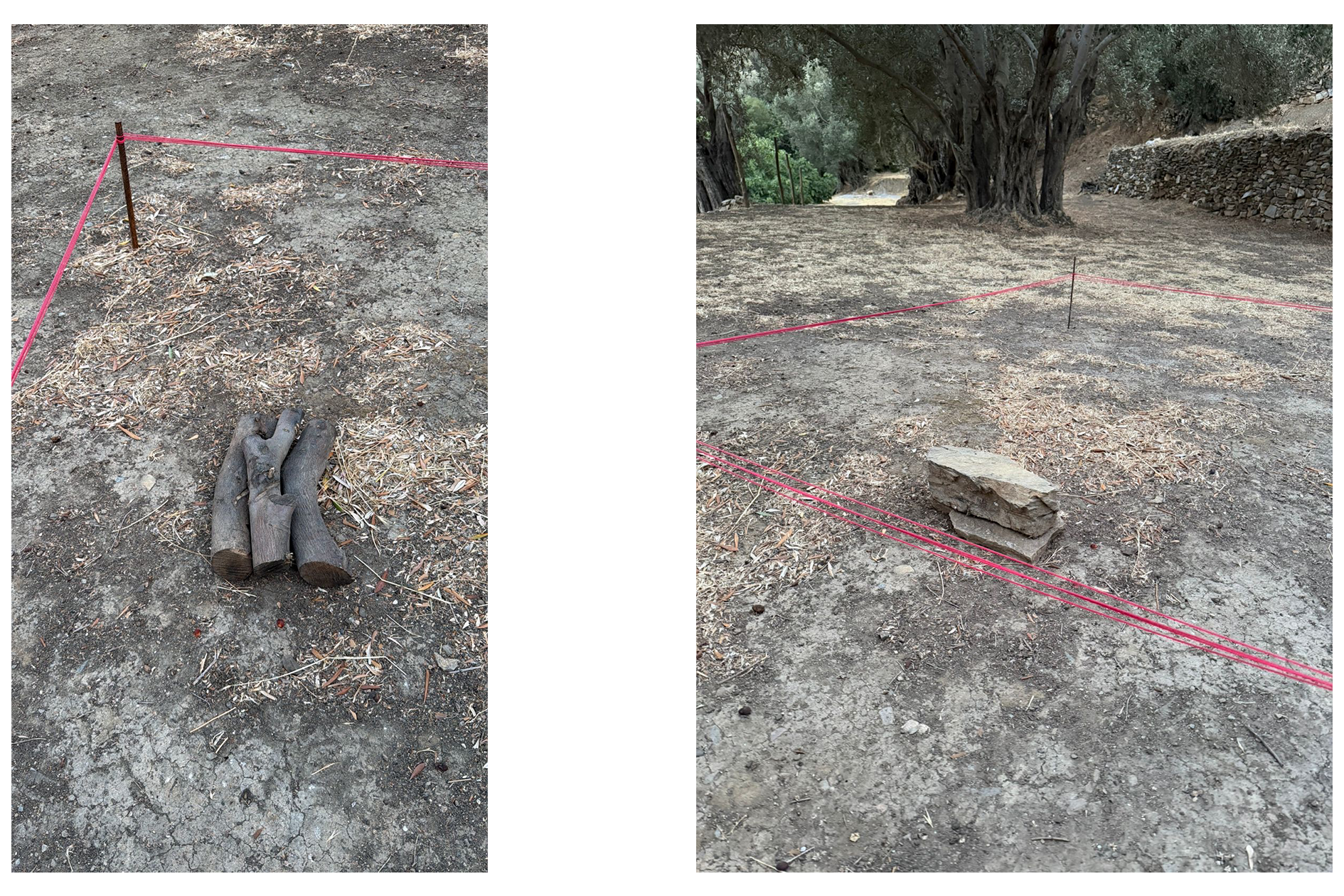
Red thread, stones, audio recording, and performance.
Phoebe Giannisi
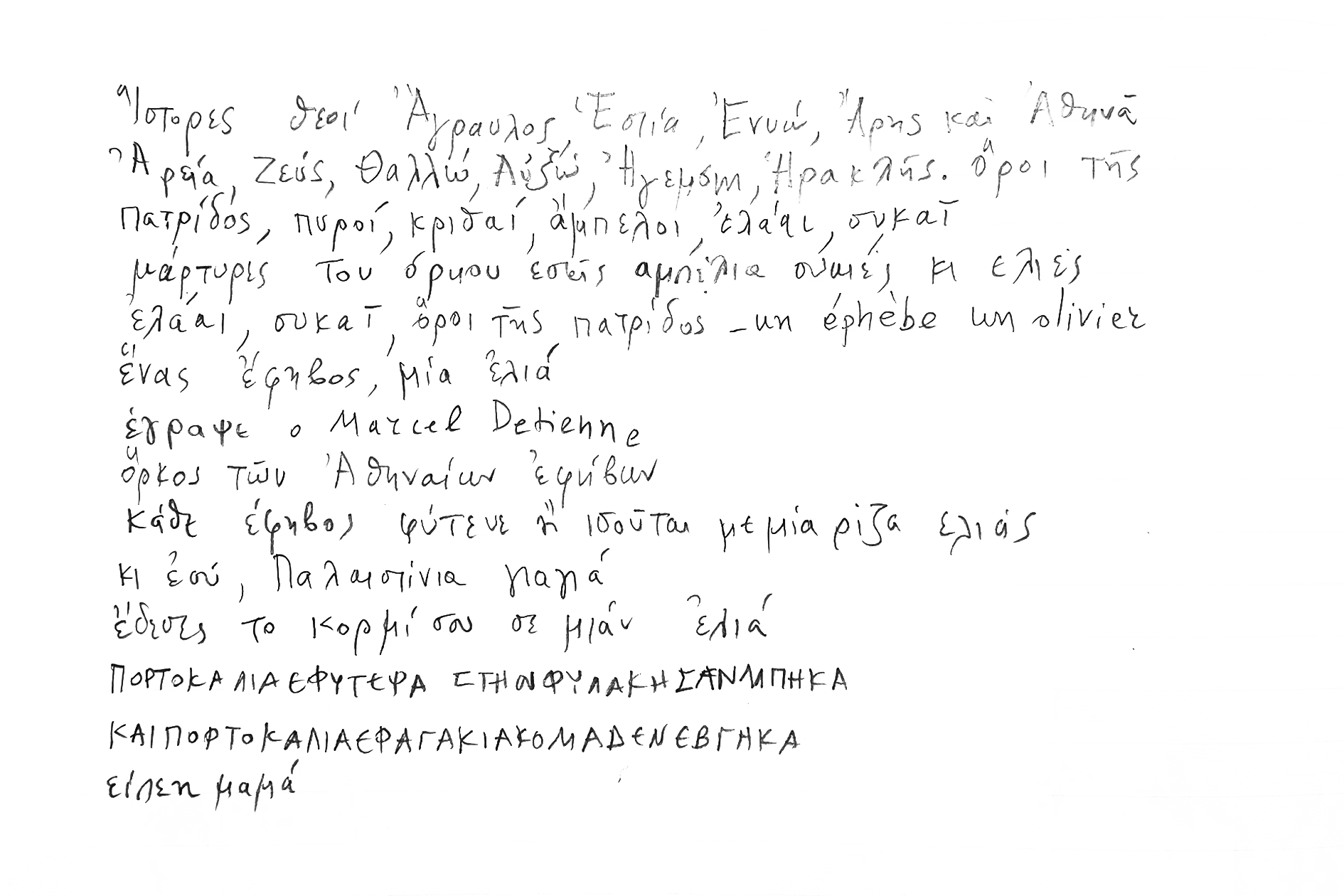
In the work Temenos, the olive trees are treated as homologous to human bodies, and the field in which they are planted as a sacred space related to the growth, development, and cultivation of new members of the community. Just as every temenos is cut off from the rest of the land and is sacred, so too is an ancient olive grove, or a part of it—the part that in this work is cordoned off with red thread. The act of cutting is followed by a performance by the attending audience: an audio recording is heard, containing a series of bodily commands combined with the reading of lexicographical definitions, poetry, and the oath of the Athenian ephebes. The aim is the synaesthetic bodily perception of the tree together with the symbolic understanding of the role of the olive in the broader cultural space of the Mediterranean. According to Marcel Detienne (One Ephebe, One Olive, 1970), the olive tree symbolizes the passage from wild nature to organized political society. During their induction as hoplites in ancient Athens, young men swear an oath at the borders of the homeland, by wheat, barley, olives, and fig trees, identifying political land with cultivated land. In ancient Dreros, the initiation of the ephebes was completed with the obligatory planting of an olive tree. This act had no economic character, but symbolized the full integration of the new citizen-hoplite into the political and cultivated space of the city.
The olive constitutes the foundational model of the ancient Greek city. Through it, every citizen takes deep root in the political land, functioning at once as nurturer (enjoying its fruits) and as protector (holding the spear against enemies).
As in Naxos and the entire Greek world, so too in Palestine the cultivation of the olive is likewise age-old and absolutely vital for survival. In the recent genocide that is still ongoing, the destruction of olives is read as vandalism and an act of extreme violence and destruction similar to the violence of the killing of children.
Just as the killings of children aim at the total extermination of the Palestinians, so too the destruction of hundreds of thousands of olive trees deprives the population of a completely basic part of its nutrition, a part of its history, and at the same time a cultural symbol.